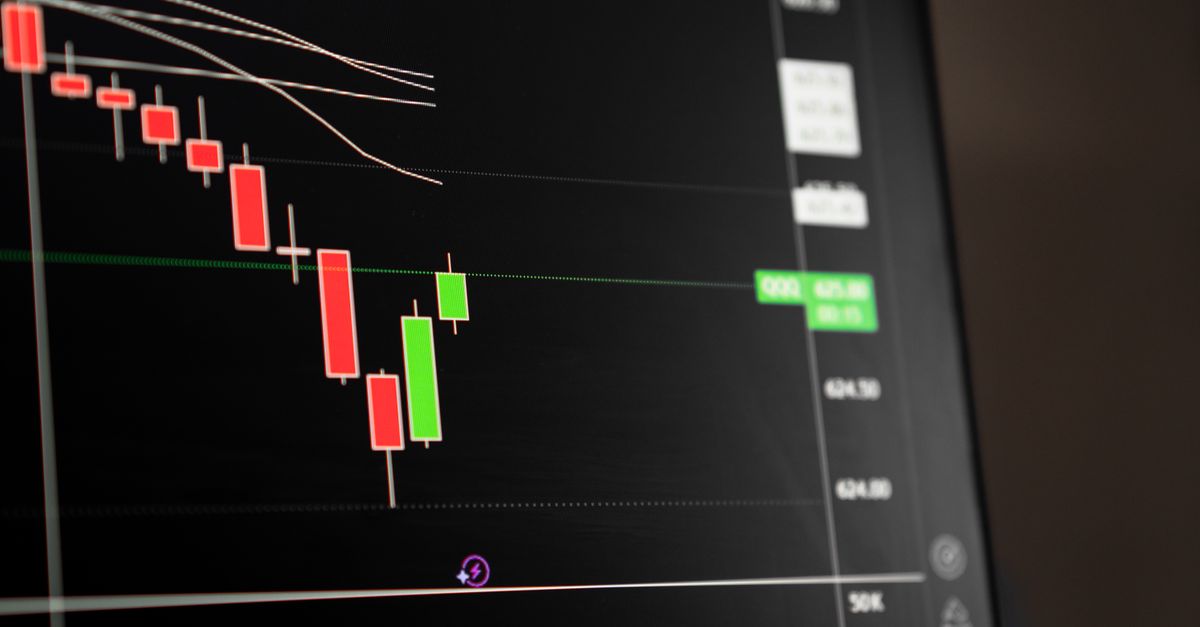
The Complete Decision Chain: Entry, Exit, and Hold
A trading system is often described in terms of indicators, timeframes, or the markets it covers, but its functional core is simpler. It answers three questions in advance: when is a trade worth taking, when must a trade be closed, and when should an open position be left alone? These three answers — entry conditions, exit conditions, and hold conditions — form a decision chain, and the chain is only as strong as its weakest link. Each link solves a different problem. Entry conditions define the opportunity set: which price configurations, indicator readings, or structural events qualify as a trade. Exit conditions define the boundary: what evidence would show the original reasoning was wrong, and what evidence would show the objective has been reached. Hold conditions define continuity: what must remain true for the position to stay open without any further action being taken. The three are interdependent. An entry without an exit leaves the duration of the trade undefined, so the outcome is decided by emotion rather than by structure. An exit without a hold condition tends to produce premature closing, because the absence of a stop trigger is mistaken for the absence of a reason to stay. A hold condition without an exit produces the opposite error, where a position is retained long after the original logic has broken down. It is worth noting what this framework does not claim. It does not claim that well-defined conditions produce profits; it claims only that they make a trade's outcome attributable to a stated rule rather than to improvisation. That distinction matters for learning. If the rules are written down before the cycle begins, the trader can later compare what was planned with what was done, and can separate a bad outcome from a broken process. Without written conditions, both errors look identical in hindsight, because there is no benchmark to compare against. This is why the questions are answered before the first trade of a cycle rather than during it. The preparation itself is the mechanism: it forces an intention to be translated into something that can be checked.
Entry Conditions: Defining When a Trade Is Worth Taking
Entry conditions answer a single question: which situations qualify as a trade? The purpose is to define a repeatable set of circumstances, so that every trade in the sample is generated by the same logic. If entry criteria vary from trade to trade, the results cannot be interpreted — a profitable outcome might come from the rule, or from whatever adjustment was made at the time. For that reason, entry criteria typically rest on observable price behaviour or indicator states rather than on expectation. Examples found in widely used approaches include a close above the upper boundary of a trading range, a pullback to a rising moving average followed by a reversal bar, an RSI reading crossing back above a threshold such as 30 after an oversold period, or, in trend following, a new high over a defined lookback window. In each case, two people looking at the same chart at the same moment would agree on whether the condition is met. A prediction such as "this market is going to rise" is not an entry condition. It cannot be verified, recorded, or evaluated afterwards, which means it cannot contribute to learning. The same applies to impressions like "the chart looks strong." These may summarise experience, but they are not auditable. Practical entry definitions usually specify details beyond the trigger itself: the instrument, the timeframe, whether the signal is evaluated intrabar or at the close of a bar, and any filters that exclude certain conditions. A trend filter might restrict entries to the direction of a longer-term average; a volatility filter might exclude unusually quiet or unusually violent sessions; a time filter might exclude the minutes around scheduled data releases. Each filter narrows the sample, and each should be written explicitly, because an unwritten filter is a discretionary decision in disguise. Common misuse of entry rules includes entering on a partial signal "just in case," chasing a price that has already moved past the planned level, and quietly adjusting a threshold after a run of losses so that recent conditions would have qualified. Each of these makes the executed sample different from the tested sample.