The Market Environment as a Design Input, Not an Afterthought
A trading system is a set of rules, but the results those rules produce depend on the conditions in which they operate. A breakout rule that buys new highs behaves very differently in a market that trends persistently than in one that oscillates inside a range, even though the entry code is identical. This is why the source material treats environment assessment as an essential part of system development rather than a commentary written after a losing month. The usual failure pattern is simple: a trader backtests a strategy, sees a promising equity curve, and deploys it without asking what kind of market produced those results. If the test period happened to be strongly directional, a trend-following approach will look excellent. If the test period was mostly sideways, a mean-reversion approach will look excellent. Neither result tells us much about how the system will behave when the environment flips, because the reported performance is partly a description of the sample, not only of the logic. Treating environment assessment as a design input changes the order of operations. Instead of starting with a strategy and then looking for a market to apply it to, the process starts with questions: is the market currently trending or ranging? Is volatility expanding or contracting? Is sentiment leaning toward greed or fear? What are liquidity and trading costs doing? Only after those questions have workable answers does it make sense to decide which logic is appropriate. This framing also removes one of the most common excuses in trading. When a system underperforms, the explanation is often reduced to 'the market is difficult right now.' A structured framework replaces that vague statement with a specific diagnosis: the system may be operating outside the environment it was built for, which is a testable proposition rather than a feeling.
The Structural Dimension: Trending Markets and Ranging Markets
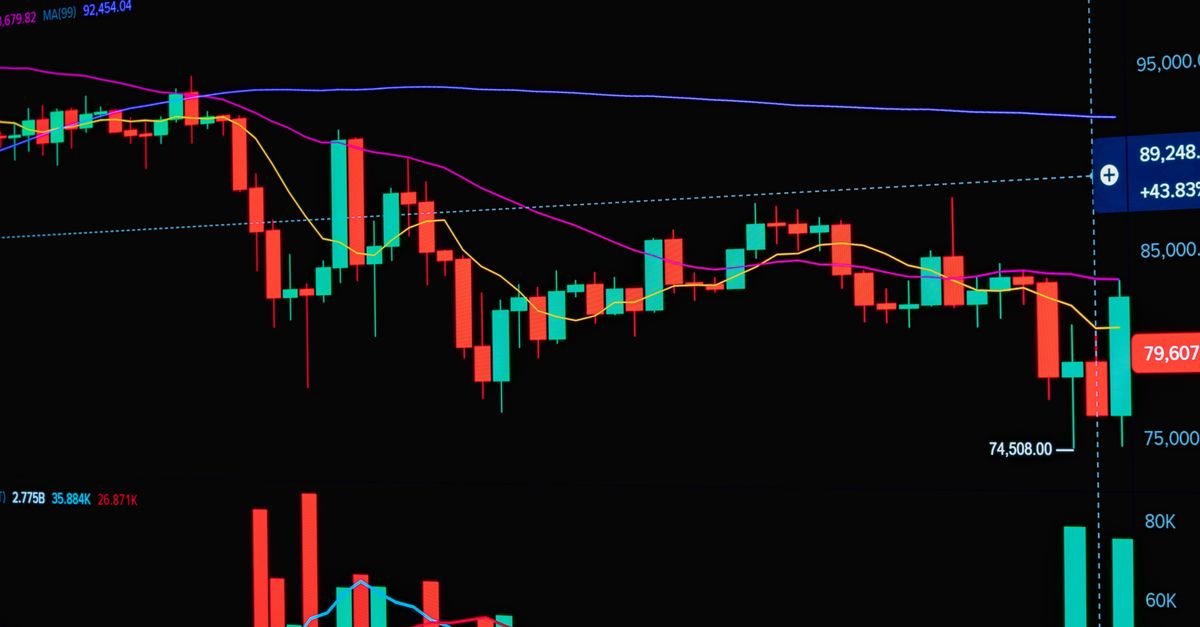
The most basic environmental distinction is between a market that trends and a market that ranges. In a trending market, price movement shows persistence: successive higher highs and higher lows in an uptrend, or the reverse in a downtrend. Returns tend to be positively autocorrelated over the relevant horizon, and pullbacks are relatively shallow compared with the overall move. In a ranging market, price oscillates around a central value area, extremes are revisited, and moves tend to be reversed rather than extended. The two states reward opposite behaviour. Trend-following logic buys strength and sells weakness, accepting a lower win rate in exchange for a small number of large gains. Mean-reversion logic does the reverse: it fades extremes, accepting occasional large losses in exchange for a high win rate on small gains. The same signal can therefore have positive expectancy in one regime and negative expectancy in the other. This is not a matter of skill or parameter tuning; it is a structural property of the environment. Several widely used measurements can help classify the state, though none is perfect. Moving-average slope and price position relative to those averages describe direction. ADX and similar directional indicators attempt to quantify the strength of a move. The ratio of net directional movement to total distance travelled, sometimes called an efficiency ratio, distinguishes an orderly trend from choppy noise. Autocorrelation of returns and the Hurst exponent are more formal tools that estimate whether a series tends to persist or revert. The practical difficulty is timing. Regimes are usually obvious in hindsight and ambiguous in real time. Classification lags, and markets spend considerable time in transitional states that fit neither label cleanly. A framework that acknowledges this lag and expects classification errors is more realistic than one that assumes the environment can be identified with certainty at the exact moment it changes.