What Entry Techniques Are Actually For
Most traders and investors rely on a surprisingly small number of entry methods. The same underlying logic keeps reappearing in variations: buy when price breaks above a recent high, sell when it breaks below a recent low, wait for a chart pattern to confirm direction, or wait for a swing indicator to show that the market has moved too far. The material groups the common approaches into channel breakout, chart-based visual entry, chart patterns, pure prediction, volatility breakout, directional movement and ADX, moving averages, and swing indices such as RSI and stochastics. Beyond the classification, the material makes a broader point about entry signals in general. The reliability of a trade — the proportion of trades that make money — is often only slightly better than random entry for many mechanical entry methods. The meaningful differences usually come from somewhere else: where the stop is placed, how the exit is managed, how position size is determined, and how many markets are traded. Entry is one component of a system, not the system itself. A second recurring contrast is between price data and derived indicators. Price information read directly is purer than an indicator that summarizes the same data. A simple, rule-based price entry — for example, buying at an all-time new high — can serve as an entry anchor while working alongside a very wide trailing stop exit. It is simple, mechanical, and requires no subjective judgment. The material also distinguishes two directional logics. Trend-following entries assume that movement will continue, and aim to capture as much of a large trend as possible, accepting low reliability and many small setbacks. Counter-trend or swing-based entries assume that markets revert from extremes. Neither is universally better; each has environments in which it tends to perform well and environments in which it does not. Understanding those conditions matters more than the signal itself. One practical theme follows from all of this: entry is not a single problem to be solved once. Entry, exit, position sizing, and market selection are separate problems with separate solutions. The rest of this article examines each entry technique and the trade-offs reported for it.
Channel Breakout Entries
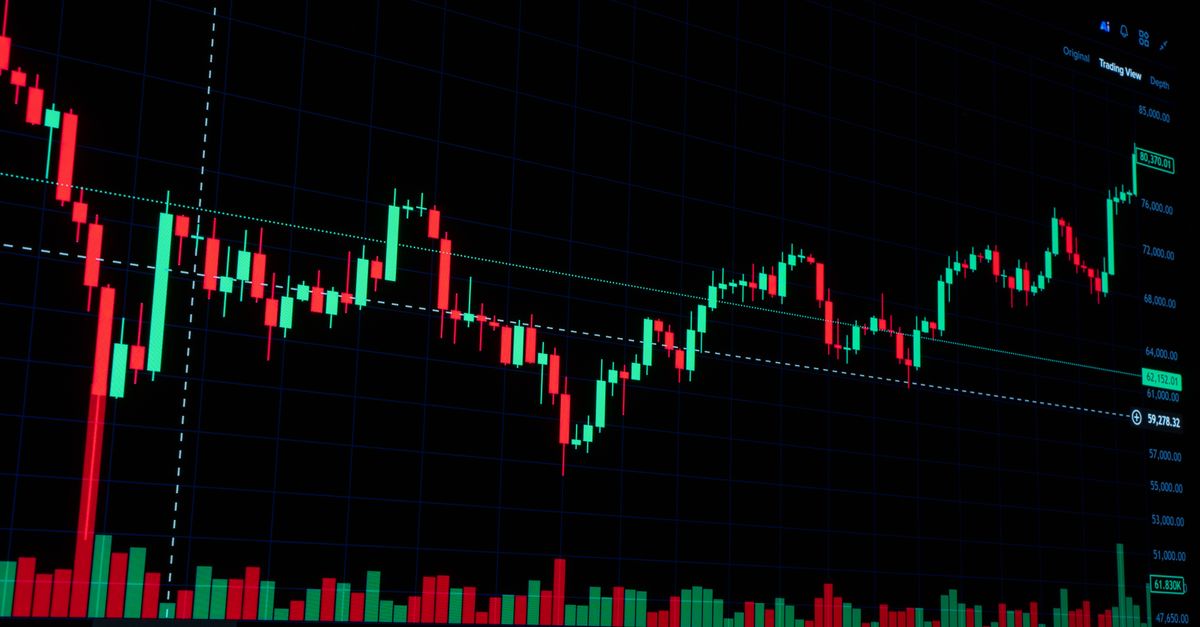
The channel breakout entry comes from the trend follower's goal of never missing a large move. The rule is simple: enter long when price makes a new high over the last X days, or enter short when price makes a new low over the last X days. The logic is that an uptrend will produce new highs, so this method will not miss a rally. Likewise, shorting new lows means not missing a decline. Although the word "channel" often suggests a market that has moved in a narrow range for several days and then breaks out, the technique does not require a prior range. The question the material highlights is how long the channel — the lookback period — should be. This determines the number of days used to generate the high or low being traded. Research cited suggests that breakout parameters of 40 to over 100 days remain reasonably effective, while shorter lookbacks are less effective, except when trading short, because bear markets tend to move quickly and sharply and may require a faster signal. In practice, a trader could mark the daily highs and lows and buy when a high exceeds the highest high of the past 20 days, or sell short when a low is below the lowest low of the past 20 days. Simplicity has advantages: it is hard to imagine a simpler entry than buying at an unprecedented new high, and the corresponding exit — a very wide trailing stop — is equally simple. Most people, however, want entry combined with some kind of plan. They ask how to select only the markets whose movement is most favorable, rather than holding every market available. This leads into the idea of a trading plan. A channel breakout can itself be used as a plan. A trader might wait for a breakout, then a pullback, and then a second breakout on a shorter timeframe. The initial stop can be placed at the initial pullback, making the initial R value small instead of ten times ATR. The ten-times-ATR trailing stop can still be used, taking over once it moves beyond the initial tight exit. Reliability may drop considerably, but the R multiple on winning trades can become very large. Variations are numerous, and a trend follower using them would theoretically never miss a major move, because without a breakout a large trend cannot exist. If a signal is missed and the trend is real, the market will keep generating new signals. Two drawbacks recur. First, it tends to produce large losses, largely a function of where the stop is placed; even using another, smaller breakout as the exit does not remove this, which makes it more an exit problem than an entry problem. Second, it usually requires substantial capital. Tests using a $1 million portfolio, various position-sizing rules, a 55-day breakout entry and a 13-day exit suggested that $1 million may be an optimal account size; a $100,000 account might trade only a few markets, while such systems typically trade 15 to 20 markets. Reliability is not much better than random entry. The advice given is to combine the signal with a trading plan: require a narrow range before the breakout, an "efficient market," or strong relative strength — in general, a series of price conditions before the breakout signal. Most of the problems related to losses and capital requirements can then be addressed through market selection and careful stop and exit design.